
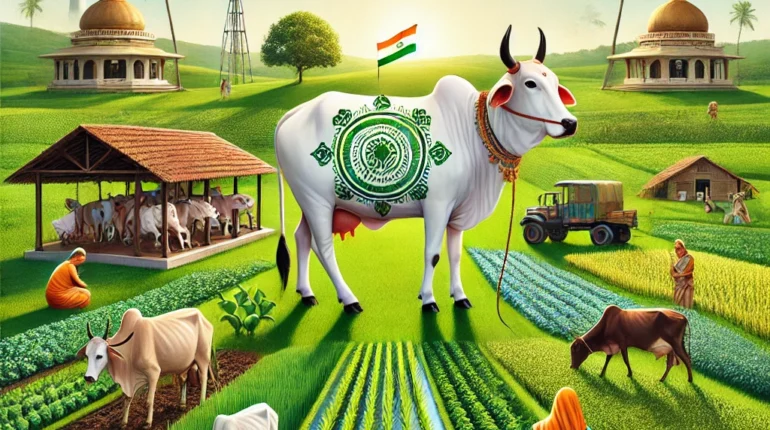
In India, the cow is regarded as a mother. This is not just a religious belief but a tradition deeply connected to our culture, environment, and economy. Cow protection is essential not only spiritually but also from a practical perspective. Let us explore the contributions of cows to Indian culture and the economy in detail.
Importance of Cows in Indian Culture
Since ancient times, cows have been revered in India. The Rigveda, Mahabharata, Puranas, and other scriptures associate cow protection with the welfare of humanity. Serving cows is considered a virtuous act, and various festivals and religious rituals include cow worship.
The association of cattle is not limited to worship alone; it is viewed as a maternal figure, making its protection a collective responsibility of Indian society. In Indian culture, the cow is depicted as Kamadhenu, fulfilling all human needs.
Cow Protection and the Environment
Cows play a crucial role in environmental conservation. Cow dung and urine are used to produce organic fertilizers and natural pesticides, enhancing agricultural productivity while reducing the harmful effects of chemical fertilizers. In organic farming, cows contribute to soil fertility and water conservation.
Dung-based fuel, bio-gas plants, and other eco-friendly products help reduce deforestation. Additionally, cow urine is considered medicinal in Ayurveda and is used to treat various ailments.
Contribution of Cows to the Indian Economy
Cattle play a significant role in India’s rural economy. The dairy industry, including milk and dairy products (curd, ghee, butter, buttermilk), provides employment to millions. The dairy sector forms a strong foundation for the economy, increasing the income of farmers and livestock owners.
Additionally, bio-gas plants utilize cow dung for energy production, reducing dependence on petroleum-based fuels. Products made from cow urine and dung, such as organic soaps, incense sticks, fertilizers, and Panchagavya items, are growing in demand, promoting self-employment and rural development.
Health and Medicinal Uses
Cow urine and Panchagavya are widely used in Ayurveda as medicinal substances. Research has shown that cow urine has antibacterial properties that enhance the immune system. Panchagavya therapy is proving beneficial in treating cancer, diabetes, heart diseases, and skin disorders.
Social and Economic Development through Cow Protection
Establishing cow shelters and promoting cow-based enterprises will not only help in cattle preservation but also create new employment opportunities. Cow-based natural farming can increase farmers’ income and improve soil health.
Efforts for Cow Slaughter Prevention and Protection
India has implemented cow slaughter prohibition laws, yet more efforts are needed for effective implementation. Social organizations, religious institutions, and the government must work together for cow protection.
Need for Cow Protection in the Modern Era
Urbanization and industrialization have led to a decline in cattle numbers. The lack of proper cow shelters, the dominance of foreign cattle breeds in the dairy industry, and the increasing use of agricultural machinery have made cow protection a serious issue. If we aim for a sustainable environment and healthy living, cow conservation must be prioritized.
Conclusion
Cow protection is not just a religious sentiment; it is also a scientific, economic, and environmental necessity. Cows are not only an identity of Indian culture but also play a vital role in the country’s economic prosperity and environmental balance. We must revive our traditional knowledge and turn cow protection into a mass movement for the benefit of society, the environment, and the economy.